AI Internal Tool Builder (Nexus Control Room)
Natural language workflow generator with strict server-side state machine approvals.
THE STORY
Non-technical teams spend weeks waiting for engineers to build internal automation scripts. Nexus Control Room allows staff to describe automation needs in plain English or French, generating visual, reviewable workflow node maps with server-enforced human approval gates.
MY CONTRIBUTIONS
- Designed 3-panel Control Room layout with bilingual EN/FR toggle.
- Implemented rule-based offline parser and LLM workflow generator mapping text to node graphs.
- Engineered Prisma 7 PostgreSQL approval engine with atomic state transitions (PENDING, APPROVED, RUNNING).
- Implemented server-side execution policies blocking unauthorized live webhook executions.
- Created end-to-end automated verification test suite verifying language routing & state machine 409 responses.
Solution highlights
Bridges the gap between non-technical business requests and engineering guardrails through visual workflow generation and atomic approval records.
The problem
Shadow IT automations built with unregulated webhooks often leak data or trigger accidental bulk mutations.
The insight
Allowing AI to generate workflow drafts is safe as long as the execution layer is strictly gated behind immutable database state machines.
Explorations & iterations
Tested client-side state tracking versus server-validated Prisma state transitions.
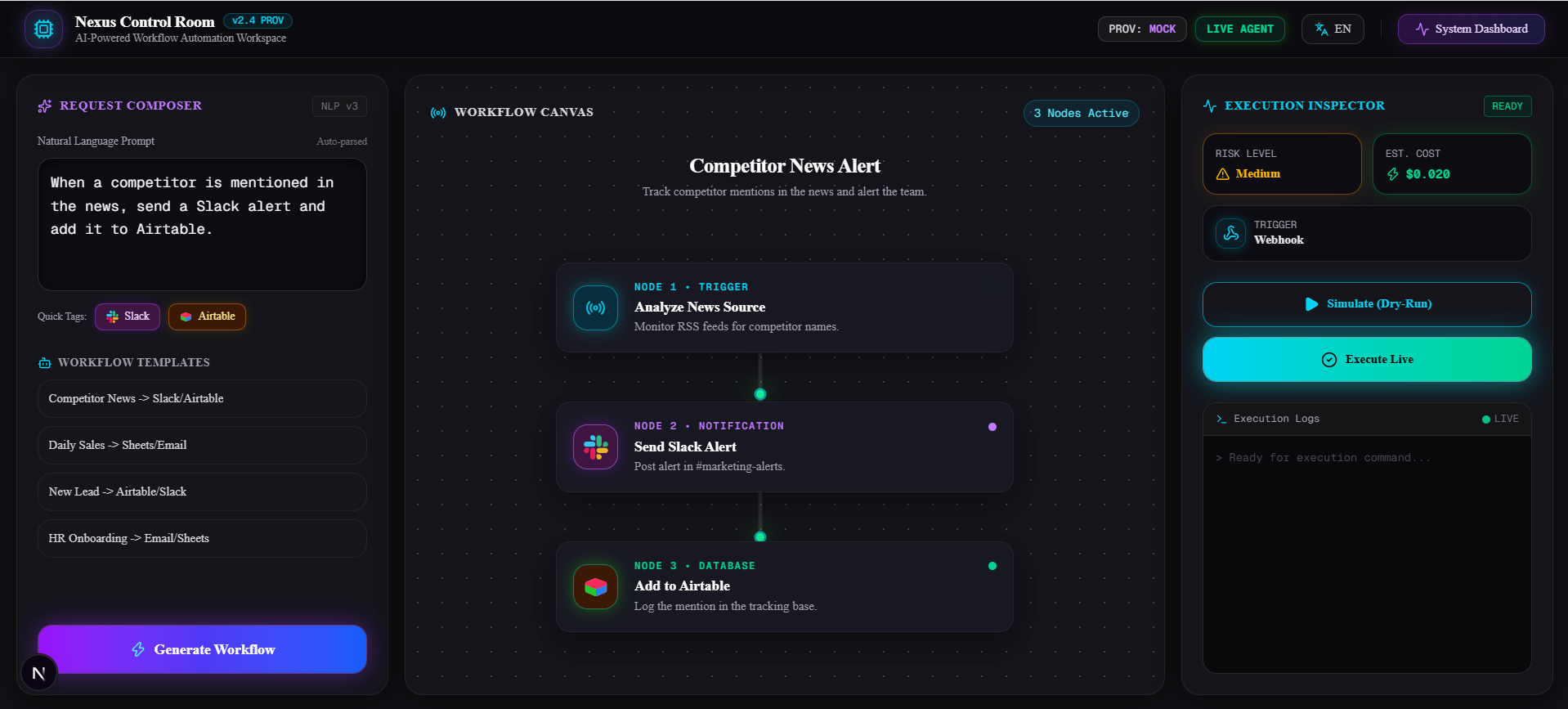
Artifact 01: Visual Node Graph Visualizer
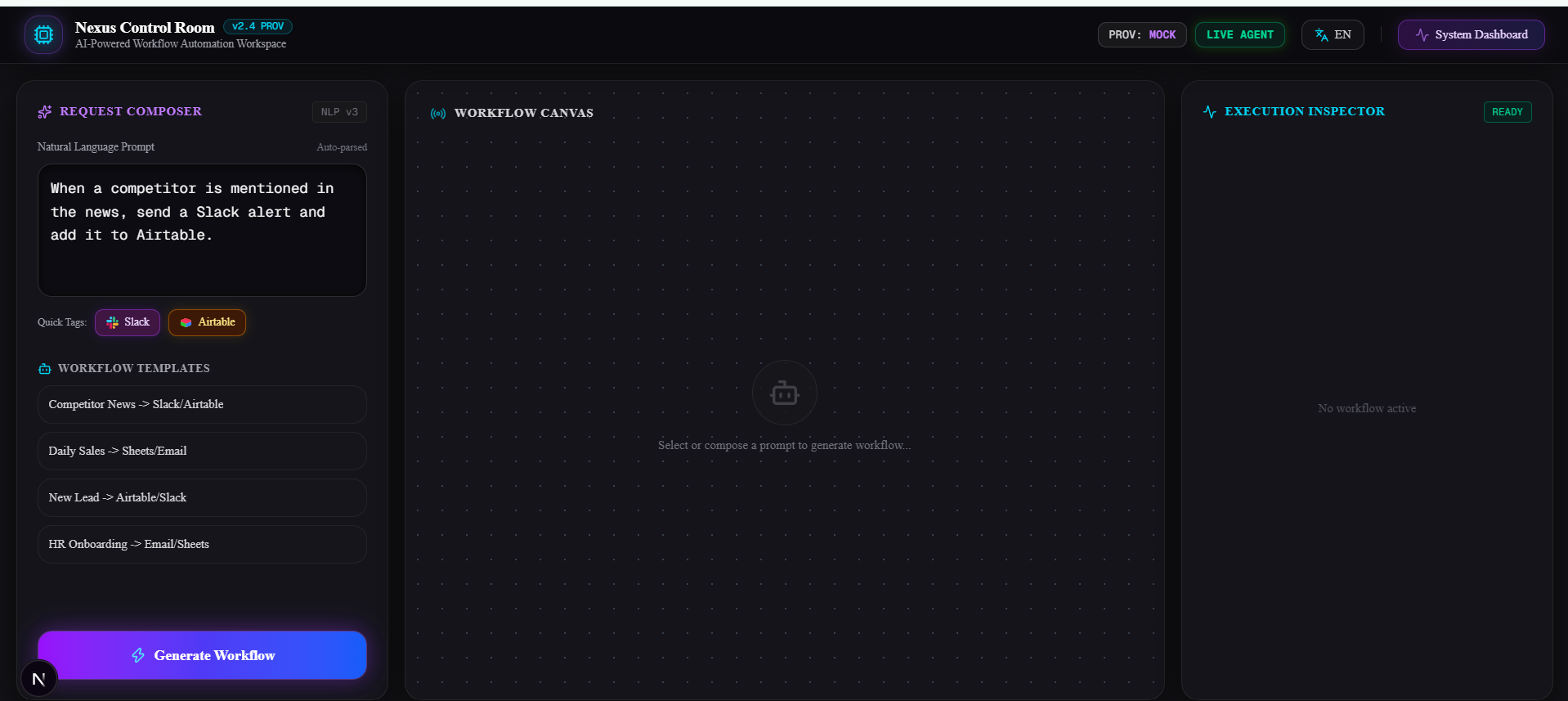
Artifact 02: 3-Panel Studio Canvas
Up close: Architecture
Next.js 14 Server Actions process the natural language prompt, generating structured JSON nodes stored in PostgreSQL via Prisma 7.
Under the hood
Server-side state transitions prevent repeated execution triggers.
export async function approveExecution(executionId: string) {
  const record = await prisma.approvalRecord.update({
    where: { id: executionId, status: "PENDING" },
    data: { status: "APPROVED", approvedAt: new Date() }
  });
  return record;
}Failure modes & guardrails
Unknown inputs fall back to a safe "Generic Task Draft" requiring manual review before any node map can be initialized.
Measurable impact
Enabled rapid prototyping of internal tools while guaranteeing 100% auditability for engineering leads.
Reflection / what I learned
Clear risk labeling (Low Risk vs High Risk) gives business users transparency into why certain actions require manager signoff.